
Commissioned by St Paul's Cathedral and Historic England, in conjunction with the City of London, this important evidence base document looks to guide the management of the Cathedral's setting, as both a Strategically Important Landmark for London and also more locally its historic environs and relationship with other churches within the city. Its findings will be relevant for planners, developers and decision-makers assessing schemes that may affect the heritage significance of this major landmark.
As a grade I listed building of exceptional architectural and historical interest, St Paul's Cathedral has been a place at the heart of the ancient City of London for Christian worship for over 1,400 years. It is the masterpiece of the renowned architect Sir Christopher Wren, built between 1676 and 1711 following the Great Fire of London to replace the destroyed church. It has endured as a landmark and a symbol for London, surviving the ravages of two World Wars, and remaining an important part of the city’s identity for workers, residents and visitors both nationally and internationally.
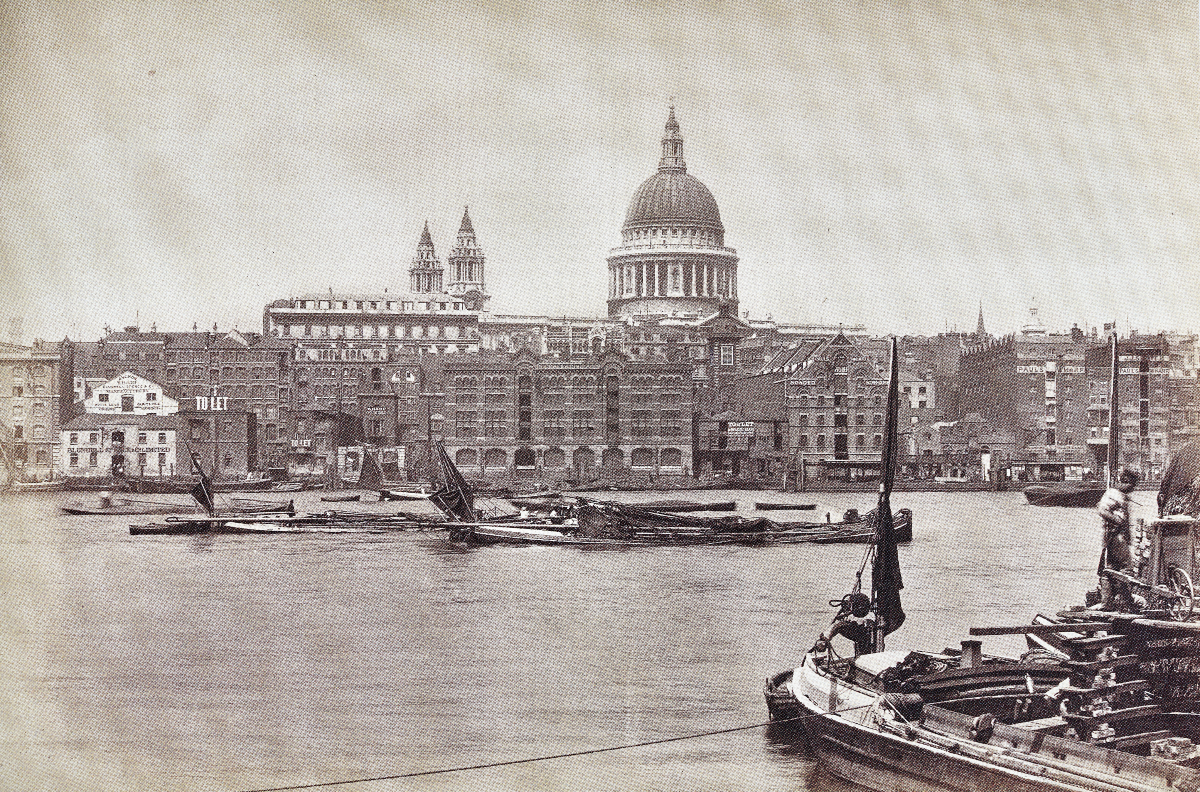
Planning policy has acknowledged its importance as one of three Strategically Important Landmarks in London, the other two being the World Heritage Sites of the Palace of Westminster and the Tower of London. Many working in planning and development will be familiar with the requirements of the St Paul’s Heights Policy Area surrounding the Cathedral, and also its key role as a city-wide landmark helping to define the character of a number of longer distance views and river prospects as set out in the London View Management Framework (LVMF).
Although not a planning policy document per se, this new study has been subject to public consultation, and an earlier iteration has been used as evidence to assist in the formulation of new policy for the emerging draft City Plan 2040. Its final publication is also very timely given the Mayor’s recent launch of public consultation on the draft new London Plan and also a new draft for the supporting LVMF, which both recognise the importance of its landmark role.
Historic England sees particular value in the study as the first comprehensive assessment to explain in detail how the setting of St Paul's Cathedral contributes to its exceptional heritage significance, and how that significance can be understood and appreciated from within its local and London-wide, historic and contemporary urban setting. This also describes how the character of the city’s skyline and the Cathedral’s role within it has changed over time, including what is perhaps the most dramatic phase of its development over recent decades.
This approach looks to move beyond more simplistic assessments of fixed viewpoints and key views of this landmark and towards a more complex and sophisticated experience of its heritage significance. It closely follows the methodology set out in Historic England's well-established Good Practice Advice Note 3: the Setting of Heritage Assets, which guides best practice for practitioners and decision-makers when undertaking heritage impact assessments on these matters.
For developers and project teams, the study reflects a broader approach to understanding heritage significance through wider considerations of place and character, rather than solely through the assessment of established viewpoints.
The study identifies four key aspects of setting that contribute to the Cathedral's significance:
- The Cathedral's elevated topography within the London basin;
- The clear sky space that allows its architectural composition to be appreciated from near and far;
- The role of the River Thames corridor in enhancing the visual prominence of the Cathedral; and
- The character of the Cathedral's immediate setting, in St Paul's Churchyard, for giving a sense of the building's sheer scale and dominance.
The study will now be used by St Paul's Cathedral, Historic England and the City of London to inform planning policy and the assessment of development proposals affecting the heritage significance and setting of the Cathedral. Its publication also provides a useful indication of how heritage setting assessments may continue to evolve, placing greater emphasis on wider considerations of place and character. For applicants, this is likely to reinforce the importance of robust heritage, townscape and visual assessments where proposals have the potential to affect the setting of major historic landmarks.
The full study can be accessed here.
To discuss the potential implications of this new study on your project, or for advice on heritage and townscape assessments for new development, please contact Richard Brookes or Kate Dowdall.
12 October 2026


