
Background
The future of planning and housing delivery in Oxfordshire is firmly back in the spotlight following the publication of the Inspectors’ Letter on the South Oxfordshire and Vale of White Horse Joint Local Plan (JLP) where they concluded the Duty to Cooperate had not been met. This decision follows the same conclusion in relation to the Oxford City Local Plan and means that each Local Plan to reach Examination since the Oxfordshire Plan 2050 was abandoned has now failed.
Here, we examine how we got to this point, explore housing delivery in Oxfordshire, and consider what this means for planning in the area.
The outcome of the JLP examination follows a period when the Oxfordshire Councils have been preparing their Local Plans based on their own assessments of housing needs (for example the City Council and Cherwell District Council).
It is not too long ago that the Oxfordshire authorities arguably led the way through collaborative plan making, with coordination on housing need and delivery, although there was always some friction in terms of how this was agreed. That said, there was never any serious suggestion that the DtC had been failed in the preparation of the currently adopted Plans. All of this was achieved under the umbrella of the Oxfordshire Growth Board (OGB).
Back in 2014, the Oxfordshire Strategic Housing Market Assessment (SHMA) was jointly commissioned by the City Council and the four District Councils, concluding that 100,000 homes were needed in Oxfordshire by 2031. Through the work of the OGB (which became Future Oxfordshire Partnership), this ‘unmet need’ of Oxford City was ‘apportioned’ across the other Districts, with each committing to assist Oxford to meet its housing needs through a Memorandum of Understanding. That overall level of housing growth was in response to committed economic growth, to address the acute need for affordable housing in the City, and to support an improvement in affordability in the area.
In 2017 the Oxfordshire Housing and Growth Deal was announced by Government. As part of the Deal, the Authorities, along with the Oxfordshire Local Enterprise Partnership (OxLEP) committed to plan for and deliver 100,000 homes (based on the 2014 SHMA) in Oxfordshire between 2011 and 2031. They also committed to adopting an Oxfordshire-wide statutory joint plan (to 2050) by 2021. This was in exchange for up to £215m infrastructure and affordable housing funding from Government as well as a range of ‘planning flexibilities’ during this period.
The preparation of the joint plan – the Oxfordshire Plan 2050 - was abandoned in 2021, with the City and Districts unable to reach agreement on the approach to planning for future housing needs. The City and District Councils then started preparing their new Local Plans, based on their own evidence on housing and employment needs.
The paths of the Local Plans now failing the Duty to Cooperate reflects the differing approaches of the Oxfordshire Councils to housing need, and failure to agree regarding Oxford’s unmet need.
Oxford City commissioned a Housing and Economic Needs Assessment (HENA, December 2022) with Cherwell District Council and proceeded to examination of its Local Plan 2040 in 2024. This identified a housing requirement above the standard method, and ‘unmet need’ that would need to be accommodated in neighbouring Districts. The Inspectors concluded that the City had failed the Duty to Cooperate due to the lack of engagement with other Districts on housing need and because it had not provided exceptional circumstances to justify a housing requirement above the standard method figure.
Hot on Oxford’s heels, South Oxfordshire and Vale of White Horse prepared their Joint Local Plan 2041, with housing numbers based on their own joint Housing Needs Assessment (August 2024) (effectively relying on the LHN at the time), and no provision to meet any unmet need from Oxford beyond existing commitments.
The JLP was one ‘of those Plans’ submitted under the transitional arrangements in the NPPF which would allow an examination to proceed despite the significant difference between the planned requirement and the Local Housing Need following the December 2024 NPPF.
As we now know, the JLP Inspectors similarly found the DtC had been failed with regards to engagement on future unmet housing need for Oxford City. This will come as no surprise to those involved in the Plan’s preparation, many of whom had long maintained the same concerns as now expressed by the Inspectors.
West Oxfordshire, and Cherwell District Council are progressing their local plans. West Oxfordshire has commissioned its own Local Housing needs Assessment, and Cherwell is no longer relying on the HENA it jointly commissioned with Oxford City, and further has not provided for any additional provision to meet any unmet need from Oxford.
Housing context – a basis to achieve commitments?
As far as we know, none of the Authorities has sought to resile from the commitment in the Deal to deliver 100,000 homes by 2031. In the following tables, we explore the similarities between the levels of growth which underpinned the Deal, the latest Local Housing Need and explore how housing delivery is performing in Oxfordshire generally. The second table demonstrates that completions and forecast supply in Oxfordshire is expected to fall some way short of the 100,000 homes but 2031 which the Deal, and the adopted Local Plans, are based upon.
These tables demonstrate that if Cherwell, for example, is to deliver the level of growth expected in its current Plan, average delivery rates to 2031 would need to exceed 2,000 dwellings per annum – significantly in excess of the adopted requirement, peak delivery rates and the recent average. West Oxfordshire would need to deliver around 1,114 dwellings a year (roughly consistent with the peak delivery rate since 2001).
Table 1: the 2014 SHMA Midpoint, the latest Local Housing Need and recent delivery rates
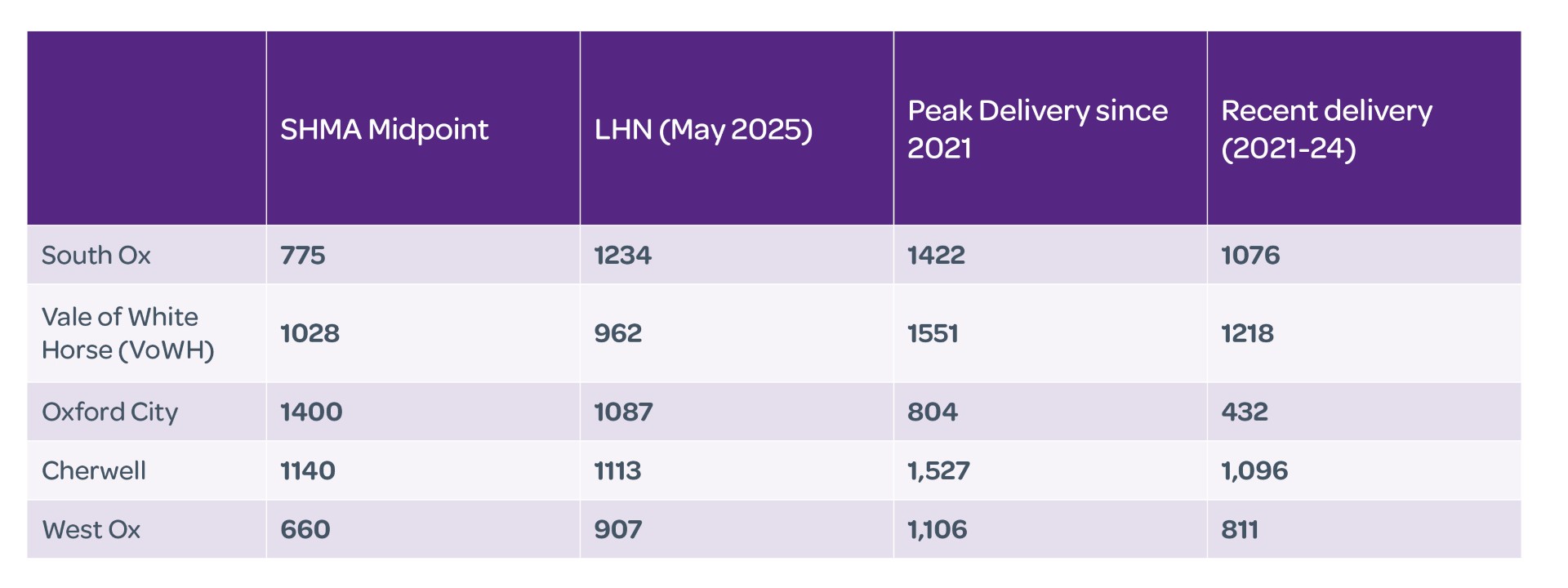
Table 2: The Prospect of Delivering 100,000 homes to 2031
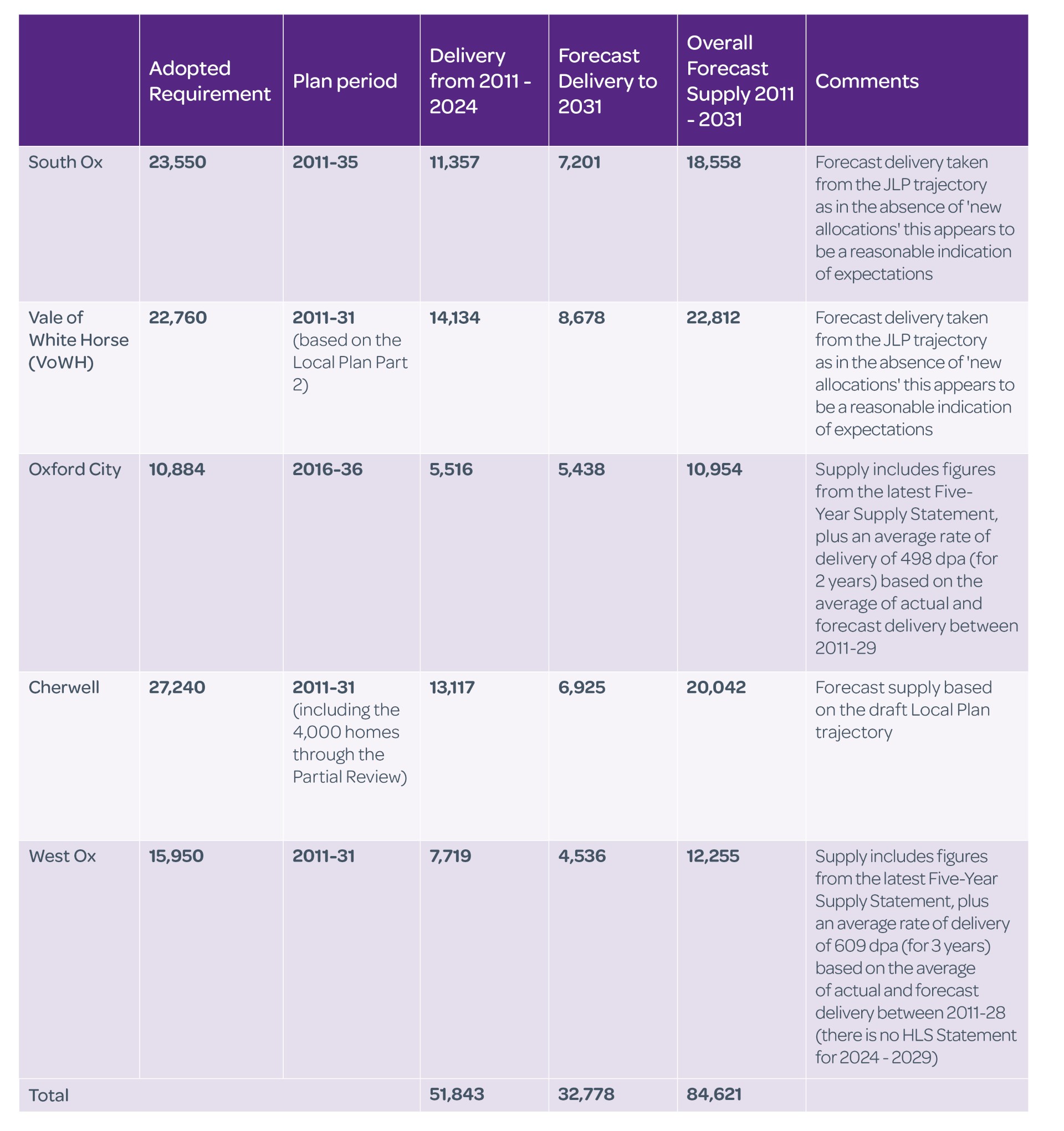
Table 3: Achieving Planned Requirements
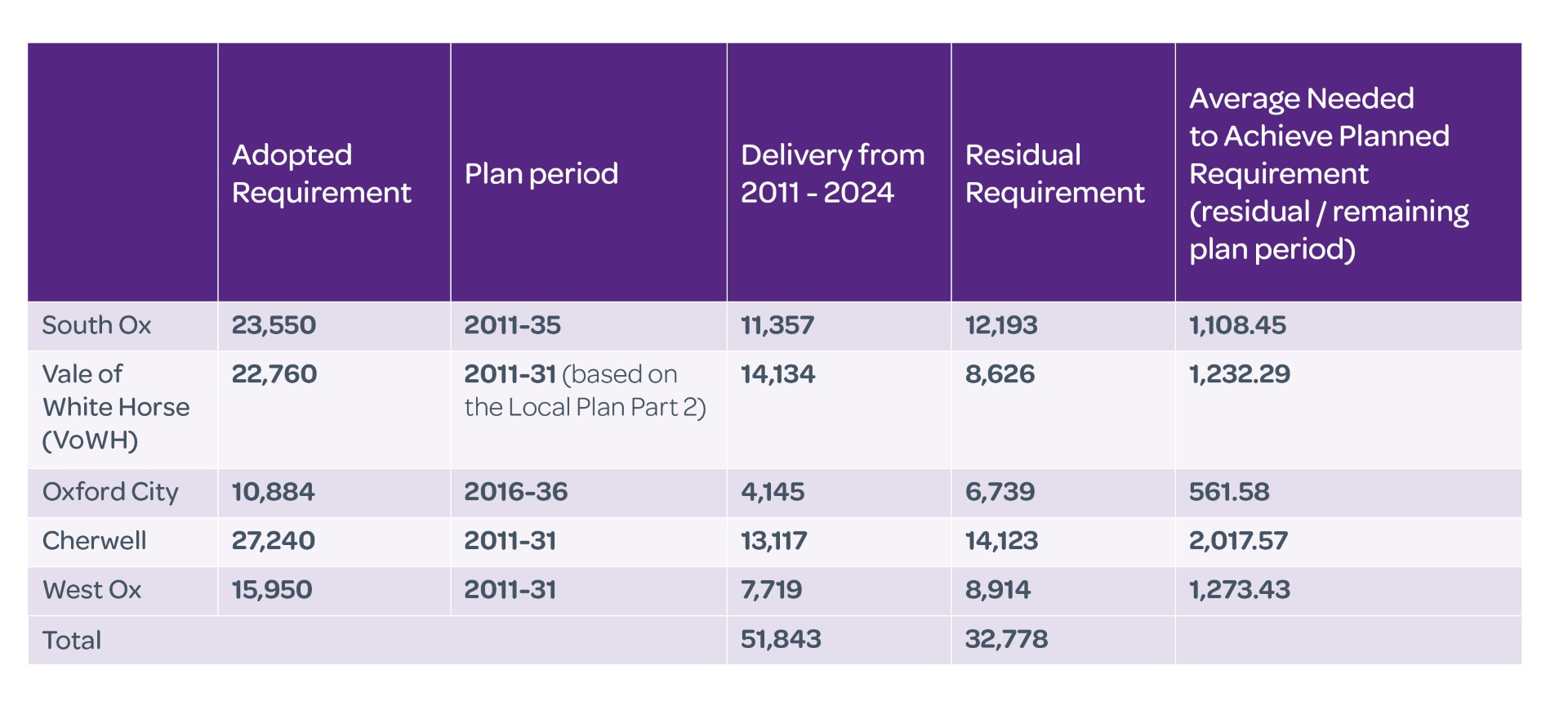
Irrespective of the issue of the 100,000 homes, these tables demonstrate an enduring reality. In 2014, the SHMA settled on a housing requirement of around 5,000 homes per annum. Cumulatively, the latest LHN results in a need for around 5,300 per annum although of course that is before any adjustments are made for economic growth for example. Elsewhere, in South Oxfordshire and the Vale of White Horse, if expectations are to be achieved, average delivery rates need to remain consistent, broadly with the LHN.
Since 2011, the average delivery rate throughout Oxfordshire has been 3,988 dwellings per annum. To now achieve the aspirations that they signed up to in the Deal would require around 6,880 per annum to 2031. Perhaps there is a separate lesson here that where commitments are made in return for such significant levels of delivery, stricter measures are required to make sure that they are achieved.
Back to the future?
Three of the Authorities have been found to have failed the DtC when producing their new Local Plans. The Local Plan for Cherwell has been submitted and with Inspectors now appointed for that Examination, the extent to which CDC has satisfied the Duty will now come under scrutiny, with the Inspectors’ initial questions suggesting they have concerns in this regard. West Oxfordshire is on the verge of being published for Regulation 18 consultation and hopefully that Authority will keep a close eye on what has happened elsewhere in the county to avoid the same issues. The baton now passes to those two Authorities to demonstrate how they have avoided the pitfalls faced by those that have failed so far.
We are also at the dawn of a return to strategic planning and on the verge of Local Government Reform which may result in the creation of a single Oxfordshire authority. Perhaps either, or both of those will see a return to comprehensive, co-ordinated planning which properly addresses the needs of this internationally significant area. Local Government Reorganisation may not, of course, be the panacea that is required – over the border in Buckinghamshire, the new Plan was to be adopted in 2025 but has faced numerous delays for a variety of reasons, not least the competing political aspirations arising through the creation of a large authority.
The foundations for that co-ordination exist. Despite a change of name (and perhaps emphasis) the Future Oxfordshire Partnership remains active. In May this year, the Oxfordshire Growth Commissioner was appointed, with the OGC to “unleash the economic potential of Oxford and Oxfordshire, by prioritising and creating a coherent narrative for the delivery of infrastructure, housing and employment across the city and surrounding area.”
How the potential of this area can actually be ‘unleashed’ in the face of failing co-operation and in a vastly different context compared to the heady days of the 2010s remains to be seen, but clearly a change in emphasis is needed.
In their joint press release following the Inspectors’ letter, the VoWH and South Oxfordshire referred to the DtC as a ‘single issue’. Perhaps that is the case, but it is a hugely important, complex issue and one which could have been avoided. We would urge each of the Oxfordshire authorities to look back a decade, and now reflect on how they turn to the next round of Plan-making.
For further advice on planning and housing delivery in Oxfordshire, contact David Murray-Cox.
13 October 2025


