
When we think about health, we often think about hospitals, GP surgeries or healthcare services. Yet our health and wellbeing are shaped by a far wider range of factors.
Increasingly, planners, developers and policymakers are recognising and responding to the central role that the built environment plays in shaping health outcomes.
This recognition is reflected in the increasing value placed on the preparation of effective HIAs, which provide a structured way of understanding how development proposals may affect the health and wellbeing of different communities. At their best, HIAs help shift the conversation beyond identifying and mitigating impacts towards proactively considering how a place can support people to live well, participate in community life and thrive over the long term.
Health is about more than healthcare
While ensuring access to healthcare facilities remains important, a growing body of evidence demonstrates that wider social, economic and environmental conditions play a significant role in shaping health outcomes.
Factors such as access to affordable housing, employment, education, green space, transport connectivity, play spaces for children and young people, social networks and community facilities all influence physical and mental wellbeing. Collectively, these factors are often described as the ‘wider determinants of health’[1].
A recurring theme throughout this year’s Healthy City Design Congress held in October 2026 was the need to move from a model centred on treating illness towards one focused on creating places that support health and wellbeing. This shift recognises that healthier outcomes can often be achieved by shaping the environments in which people live, work and spend their time.
This is reflected in planning guidance across the UK. New best-practice guidance from Public Health Wales[2] highlights that HIAs help identify both the positive opportunities and potential unintended consequences of development proposals. They provide a framework for considering a broad range of factors, including walkability, air quality, noise, access to green and blue spaces, public transport connectivity, access to employment and education and the availability of community facilities and services.
Taken together, these factors influence people’s opportunities, life chances and overall wellbeing.
Planning decisions therefore have a significant role to play in determining health outcomes. Well-designed neighbourhoods can encourage walking and cycling, support social interaction, improve access to services and create opportunities for physical activity. Conversely, poor design choices can reinforce isolation, inequality and unhealthy lifestyles.
This is particularly relevant in the context of the revised National Planning Policy Framework (NPPF)[3], which places significant emphasis on housing delivery and economic growth while continuing to promote healthy, inclusive and sustainable communities. Chapter 16, Promoting Healthy Communities (Policies HC1-8), reinforces the idea that health is not separate from successful development but a key component of creating places that are sustainable, resilient and attractive in the long term.
Importantly, HIAs are most effective when undertaken early in the design process, before planning applications are submitted, when recommendations can still be incorporated into proposals or, better still, embedded within masterplan development.
Designing places where people feel they belong
A recurring theme throughout the Congress was the growing recognition that creating healthy places requires more than providing physical infrastructure. While this is now well understood across much of the planning and development sector, speakers explored how health outcomes are shaped by the ways people experience, access and engage with the places around them.
As Government seeks to accelerate housing delivery and meet ambitious housebuilding targets, it is essential that the focus remains not only on the quantity of development but also on the quality of places being created.
In his keynote presentation, Dr William Bird reinforced this message through his Health Creation Matrix, which highlights the relationship between people, purpose and place. The framework suggests that health is shaped by factors such as trust, community, autonomy, fulfilment and a sense of home, rather than physical infrastructure alone.
Creating a park, for example, does not guarantee people will use it. People must also feel safe, welcome and valued within those spaces.
Research and community engagement work undertaken by Intelligent Health demonstrates that two residents living the same distance from a park can experience it very differently. Perceptions of safety, social connection, belonging and cultural relevance are closely linked to wellbeing and often determine whether people choose to engage with a space. These factors can be every bit as important as physical proximity.
As Dr Bird noted, chronic stress is frequently linked to environments where people do not feel safe, connected or supported. Conversely, strong neighbourhood attachment, social trust and community relationships can improve resilience, wellbeing and recovery.
From a placemaking perspective, this means creating places that not only function effectively, but also foster relationships, community participation and a sense of ownership.
Understanding different experiences of place
Alongside the importance of belonging and social connection, the Congress also highlighted the need to recognise that different groups can experience the same place in very different ways.
Women and girls may experience public spaces differently from men and boys. Older and disabled residents, as well as those with young children and buggies, may face mobility barriers.
Young people, neurodivergent people and individuals from different cultural backgrounds may have distinct needs and experiences that are not immediately apparent from demographic data alone.
For those involved in shaping the built environment, this raises important questions. Are new public spaces designed for everyone? Do women, older residents, young people and minority communities feel equally welcome? Are community assets and local networks being strengthened alongside physical infrastructure?
Understanding these differences is essential to ensuring that development benefits all individuals within a community. A neighbourhood may score highly on measures such as access to green space or affordable housing, while still feeling inaccessible, exclusionary or unwelcoming to some groups. Equally, developments can meet planning requirements but fail to respond to the realities of local communities.
This is where HIAs and Equality and Health Impact Assessments (EHIAs) can add significant value. By combining literature and policy review, local evidence, community engagement and health data, HIAs help identify who benefits from a proposal, who might be disadvantaged, and what changes could improve outcomes. They provide a structured way of understanding local context and lived experience, helping ensure that recommendations are grounded in the needs of real communities rather than assumptions.
Healthy places require collaboration
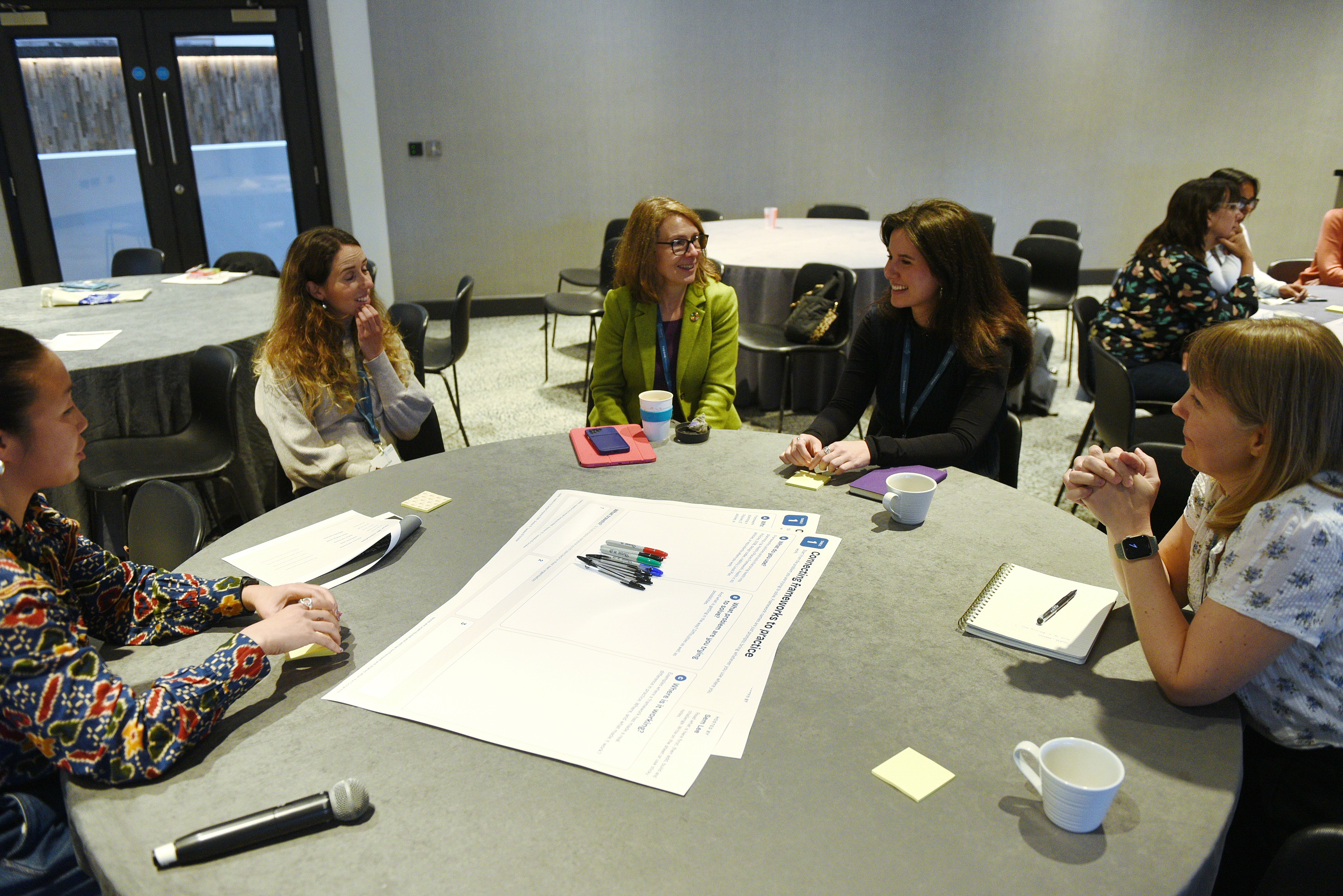
Another important takeaway from the Congress was the need to break down traditional silos.
Several speakers highlighted the challenge of translating policy ambitions into meaningful development outcomes. While health is increasingly referenced within planning policy, delivering tangible improvements in wellbeing requires coordinated action across multiple sectors.
Transport provides a good example. Professor Audrey de Nazelle highlighted the well-known health implications of car dependency, arguing that healthier streets require reducing the dominance of vehicles and creating more space for walking, cycling, planting and social interaction.
The potential benefits extend far beyond transport itself. These include increased physical activity, improved air quality, safer streets, more room for play, lower noise levels and stronger opportunities for community interaction. In this way, health becomes a cross-cutting consideration that connects transport, housing, public realm, community infrastructure and economic development.
HIAs provide a practical mechanism for bringing those conversations together and ensuring that health considerations are integrated throughout the planning and design process.
Creating lasting social value
Presentations at the Congress highlighted how developments that respond to local needs often achieve stronger long-term outcomes, including greater community support, improved reputation and more resilient places. Ultimately, this helps create places where people want to spend their time.
Health, social value, community creation and economic growth are closely interconnected. Places where people feel safe, connected and able to participate in community life tend to see benefits that extend beyond wellbeing alone. They are often more attractive places to live, work and invest.
Importantly, these outcomes support the priorities of multiple stakeholders. For individuals, access to good quality housing, employment opportunities, education, healthcare and community infrastructure can help improve health, wellbeing and life chances. For communities, these factors can strengthen social cohesion and resilience. For local authorities and national government, healthier and more inclusive places can contribute to wider objectives around sustainable growth, reducing inequalities and supporting long-term economic prosperity. For developers, they reinforce the value of creating places that meet local needs and generate lasting social and economic benefits, demonstrating why health and wellbeing should be considered a core component of successful placemaking.
How HIAs can help
Healthy places are the result of deliberate choices, informed evidence and collaboration between those involved in shaping the built environment.
HIAs provide a practical mechanism for making those choices more informed. By identifying health risks and opportunities early, engaging communities, considering the needs of different population groups and providing evidence-based recommendations, HIAs can support the creation of healthier, more inclusive and more equitable places.
As the built environment sector increasingly focuses on inclusive growth, the question is no longer whether health should be considered in development, but how effectively it can be embedded into the places we create.
The most successful developments will not simply be those that meet policy requirements or deliver homes at scale. They will be the places where people feel safe, connected, included and able to thrive. HIAs provide a valuable opportunity to put those outcomes at the heart of decision-making from the outset.
This article is part of our Inclusive Growth series, exploring the many strands of inclusive growth and how they contribute to creating stronger communities. To find out more about how HIAs can support your project, please contact Marta Ocampo Astudillo.
5 November 2026
[1] Barton, H. and Grant, M., (2006) A health map for the local human habitat, Journal of the Royal Society for the Promotion of Public Health, 126 (6) pp252-261.
[2] Guidance for Planning Authorities in Wales (opens in new tab)
[3] Ministry of Housing, Communities and Local Government (2026) National Planning Policy Framework (opens in new tab)
